



Four Systems Buyers Are Actually Sourcing
1. Broadcast system
The supplied configuration covers AM 520–1710 kHz, FM 87.5–108 MHz and SW 3.0–18.0 MHz. This keeps the model useful as a conventional radio even when a phone or local media source is not connected.
2. Digital-media system
Bluetooth supports wireless audio from compatible devices. USB-A and SD-card interfaces provide local media options, and the product specification also lists recording with external SD storage. A digital LED display shows operating information including frequency, time and battery status.
3. Power system
The standard platform uses a rechargeable lithium-ion battery rated at 2000mAh or above, with 3 × AA batteries as a replaceable backup source. A built-in 1.0W solar panel provides supplementary charging support rather than replacing normal wired charging.
4. Listening and control system
A 57 mm, 2Ω/5W speaker provides approximately 3W output. Separate volume and EQ controls allow basic sound adjustment, while the 3.5 mm earphone jack supports private listening. The carry handle keeps the cabinet practical for room-to-room, travel and outdoor use.
Technical Reference for Quotation
|
Item |
Supplied specification |
Item |
Supplied specification |
|
Bands |
AM / FM / SW |
Bluetooth |
Supported |
|
AM |
520–1710 kHz |
FM |
87.5–108 MHz |
|
SW |
3.0–18.0 MHz |
USB interface |
USB-A |
|
Other interfaces |
Micro USB / SD card slot |
Recording |
Supported |
|
Built-in battery |
Lithium-ion, ≥2000mAh |
Backup power |
3 × AA, not included |
|
Solar panel |
Built-in 1.0W |
Display |
Digital LED display |
|
Speaker |
57 mm, 2Ω, 5W |
Sound output |
Approx. 3W |
|
Earphone |
Φ3.5 mm |
Weight |
Approx. 500 g |
|
Shell |
ABS + PC |
Accessory |
USB cable, no adapter |
How Buyers Can Position a Bluetooth Radio with USB Across Channels
HT-K200 is easier to merchandise when the buyer defines which of its four systems leads the sales message. The same hardware can be presented very differently for a home-audio range, a portable-radio range or a limited-power/outdoor assortment.
Home, workshop and countertop audio
For indoor use, the strongest story is source flexibility: AM/FM/SW for broadcast listening, Bluetooth for phone audio, USB/SD for local media, plus speaker and earphone output. The digital display and EQ control make this version more feature-rich than a basic analog table radio.
Travel and portable retail
The rechargeable battery and carry handle support portable use, while AA backup power reduces dependence on a single battery system. Buyers can bundle the unit with travel, temporary-stay or general portable-electronics programs without presenting it as a dedicated emergency device.
Camping and limited-power assortments
The 1.0W solar panel is a useful supplementary feature when normal charging is less convenient. For accurate retail positioning, solar should be described as an additional charging route; the primary charging and power arrangement should still follow the confirmed production specification.
Claim-Control Board Before Artwork Is Approved
|
Sales claim |
What the source supports |
What should be confirmed before printing |
|
Recording |
Recording is listed as supported. |
Confirm the production version and external SD-card requirement. |
|
External storage |
SD card, at least 16GB for the recording function. |
Card is not listed as a standard included accessory. |
|
Solar function |
Built-in 1.0W panel for supplementary charging. |
Avoid presenting it as the main charging source unless the approved sample supports that claim. |
|
Battery |
Rechargeable lithium-ion battery ≥2000mAh plus 3 × AA backup. |
Print only the capacity and chemistry confirmed for the order. |
|
USB |
USB-A interface plus Micro USB connection. |
Differentiate media/playback use from charging use in the manual and artwork. |
|
Operating temperature |
Source table lists -15 to 80°C. |
Reconfirm the exact approved production specification before using this range as a market claim. |
OEM/ODM Planning as a Configuration Freeze Sheet
For this model, a useful OEM discussion is not a generic six-step flow. The buyer and factory should separate what is already part of the platform, what can be changed commercially and what requires engineering confirmation. That reduces the chance that packaging artwork is approved before the underlying SKU is stable.
Layer A - Core platform to identify clearly
• AM/FM/SW radio architecture and the intended frequency setup for the destination market.
• Bluetooth, USB-A, Micro USB and SD-card interfaces included in the selected version.
• Rechargeable-lithium battery, three-AA backup arrangement and built-in solar panel.
• Digital LED display, recording function, speaker, EQ/volume controls and 3.5 mm earphone output.
Layer B - Commercial items that can be prepared for the buyer
• Logo treatment, product identification, barcode and SKU labels.
• Housing color or finish subject to production feasibility and MOQ review.
• Retail box, user manual, carton marks and destination-language presentation.
• Accessory list and warehouse / retailer identification requirements.
Layer C - Changes that should trigger technical review
• Battery-capacity or battery-chemistry changes.
• Radio-frequency changes or market-specific tuning requirements.
• Changes to Bluetooth, USB, SD, recording, solar or other functional hardware.
• Any claim that changes power behavior, storage requirements, output or operating limits.
Pre-Sample Decision Sheet
|
Buyer input |
Example for HT-K200 |
Output to freeze before sample |
|
Destination market |
Country / region and retail channel |
Band setup, labeling and compliance review scope |
|
Order volume |
Initial quantity and repeat-order expectation |
MOQ, material planning and quotation basis |
|
Brand presentation |
Logo, color, packaging style |
Artwork brief and visible sample requirements |
|
Media functions |
Bluetooth / USB / SD / recording priorities |
Functional checklist for the evaluation sample |
|
Power plan |
Battery capacity, AA backup, solar claim |
Battery specification and transport-document basis |
|
Retail contents |
Cable, manual, labels, accessory requests |
Final packing list and box-content statement |
Three approvals before batch production
First approve the electrical and media functions. Second approve the visible product, labels and user interface. Third approve the retail box, manual, barcode and outer-carton identification. A standard sample can typically be prepared in about 5 days; mass production is normally planned around 30 days, subject to quantity, customization, components and factory loading. Standard MOQ is 500 PCS.
Function-Chain Acceptance: Test the Product the Way a Buyer Uses It
A Bluetooth Radio with USB should not be approved only by checking whether it powers on. The useful acceptance sequence follows the actual source switching, storage, recording, audio output and power paths that create the purchasing value of HT-K200.
|
User action / system |
Acceptance focus |
Reason for the buyer |
|
Start from rechargeable battery |
Power-on stability, display, battery indication |
Confirms the normal portable-power path. |
|
Switch to 3 × AA backup |
Clean source change and stable operation |
Confirms the replaceable-battery fallback actually works. |
|
Tune AM / FM / SW |
Reception, tuning response, speaker output |
Verifies the three broadcast bands on the approved version. |
|
Pair Bluetooth source |
Pairing, reconnect behavior, audio playback |
Checks the wireless-audio path rather than only the radio. |
|
Use USB-A media |
Media recognition and playback |
Confirms local-media use on the production unit. |
|
Use SD card / recording |
Card recognition, recording trigger, file/storage behavior |
Separates storage and recording claims from generic playback claims. |
|
Check LED display |
Frequency / time / battery information as applicable |
Confirms the visible user interface matches the manual. |
|
Adjust volume and EQ |
Control response and speaker behavior |
Confirms the audio-control path. |
|
Use 3.5 mm earphone |
Private-listening output |
Confirms the alternate audio-output path. |
|
Check solar-assisted input |
Solar response under the approved test condition |
Confirms the supplementary charging feature without overclaiming. |
|
Check charging & cable |
Micro USB charging path and supplied USB cable |
Links the product function to the actual retail contents. |
Batch Control Points After the Sample Is Approved
• Keep the same confirmed battery capacity and chemistry unless a formal change is approved.
• Match the programmed / tuned radio version to the destination-market specification.
• Verify USB, SD, Bluetooth and recording functions on the defined sampling plan.
• Check labels, barcodes, manual language and retail contents against the approved SKU, not a generic stock unit.
• Photographic or inspection evidence can be prepared when the buyer requires a pre-shipment review.
Lithium-Battery Export Release and Packing Control
HT-K200 contains a rechargeable lithium battery, so shipment preparation should be tied to the battery that is actually installed in the finished order. Documentation from another model or a different battery capacity should not be assumed to apply automatically.
Battery-document file
• UN38.3 test documentation for the confirmed battery configuration, where applicable.
• MSDS / material safety information matched to the battery supplied in the order.
• Air-transport or sea-transport supporting report when required by the selected route, carrier or forwarder.
• Any additional destination- or carrier-specific paperwork identified before booking the shipment.
Retail and carton release file
• Individual product protection, retail box and approved accessory set.
• USB cable listed correctly; power adapter is not included in the supplied specification.
• AA batteries and external SD card should not be shown as included unless the commercial order adds them.
• Barcode, SKU label, manual, carton marks and shipping identification should match the frozen artwork file.
Historical Supply Coordination - What the Buyer Can Take from It
The source material describes a long-term European customer whose radio programs required control of casing materials, PCB, solder, wiring and other specified components. During the 2025 power-outage period in Spain and nearby markets, an additional 50,000-unit requirement was coordinated within one month, with air shipments released in batches of up to 10,000 units. This was a different radio program, so it should be read as a manufacturing and replenishment reference rather than as a claim about HT-K200 order history.

Why that history is relevant to this model
|
K200 sourcing concern |
Relevant manufacturing discipline |
|
Multi-function BOM |
Component requirements must stay aligned across radio, digital media and power subsystems. |
|
Battery configuration |
Battery-related requirements need to remain consistent through purchasing, assembly and shipment. |
|
Repeat orders |
A frozen SKU helps later batches match the same functional and packaging definition. |
|
Urgent replenishment |
Material, production, inspection and logistics planning must be coordinated rather than handled separately. |
Factory Evidence, Documentation Review and Buyer FAQ


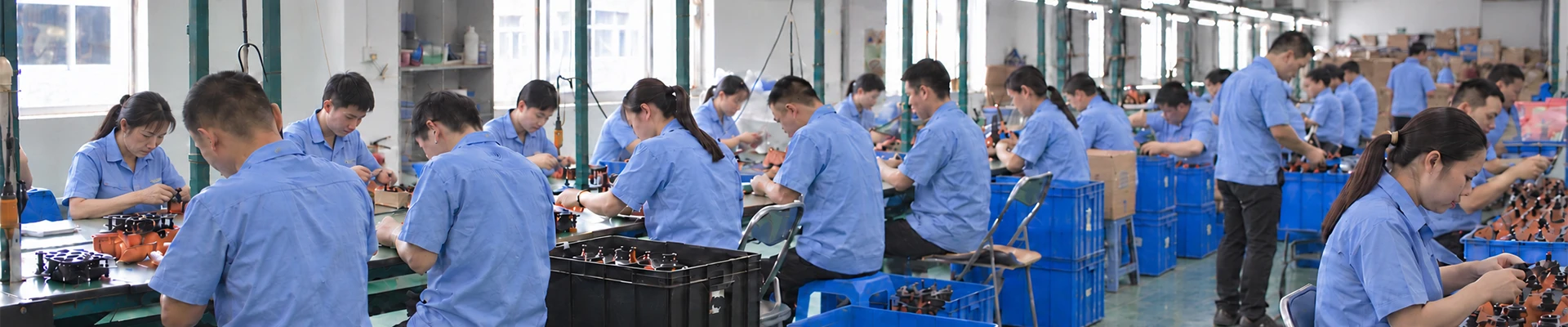
The supplied product page shows Hai Tong customer / factory imagery and certificate examples. It also describes production support covering PCBA/SMT processing, assembly, functional verification, aging procedures and shielding-related testing. For any specific order, the buyer should request the exact certificate, report or audit document that applies to the final model, configuration and destination market rather than assuming every displayed document applies to every SKU.
Buyer FAQ
Q1: What Is The Standard MOQ?
The standard MOQ is 500 PCS. Special colors, battery changes, packaging or other non-standard requirements can affect the workable quantity, so the commercial specification should be reviewed before the quotation is finalized.
Q2: Can A Buyer Order A Sample First?
Yes. Samples can be supplied for function and product evaluation before mass production. The buyer normally covers the sample charge and express freight. Customized sample cost and preparation time depend on the requested changes.
Q3: What Production Timing Should Be Planned?
A typical mass-production schedule is around 30 days after the order specification is confirmed, subject to quantity, customization, component availability and factory loading. If the required configuration is available from stock, shipment may be arranged faster after stock confirmation.
Q4: What Payment Terms Are Normally Used?
T/T is normally accepted. For orders of USD 1,000 or above, the standard term is 30% deposit with the remaining 70% paid before shipment, unless another project-specific arrangement is confirmed in writing.
Q5: Can I Evaluate A Bluetooth Radio With USB Before Bulk Production?
Yes. The evaluation sample should be used to approve the actual bands, Bluetooth and media functions, recording behavior, battery arrangement, solar feature, display, audio outputs, branding and retail presentation. Freezing these points before production gives both the buyer and factory a clear reference for the finished order.
For quotation: send the destination market, estimated quantity, required functions, preferred battery / power configuration, branding files and retail-packing expectations. Hai Tong can then review the workable HT-K200 version and prepare the commercial basis for sampling.
Hot Tags: bluetooth radio with usb, China bluetooth radio with usb manufacturers, suppliers, factory


