




Eight-Band Listening Map
Local broadcast layer
FM 88-108 MHz and MW/AM 530-1600 KHz cover the everyday broadcast layer. These two bands make the product understandable to mainstream radio buyers even when shortwave is not the primary purchase reason.
Shortwave layer
SW1-SW6 span 5.90-18.10 MHz according to the supplied specification. The six shortwave ranges are the main feature that separates HT-858 from simpler two-band carry radios and give regional distributors more flexibility when shortwave listening still matters.
Listening layer
Users can listen through the built-in loudspeaker or connect personal headphones through the D3.5mm socket. The 360-degree swiveling telescopic antenna can be repositioned during tuning, which is useful when the radio is carried between different listening locations.
Power layer
The standard configuration lists a 3V 300-400mA hand-crank dynamo, an included 2.4V 300mAh Ni-CD AA rechargeable pack, support for two D-size dry batteries and a DC 3V/300mA input. These routes should be treated as operating alternatives rather than described as one generic charging system.
Technical Reference
|
Item |
Supplied specification |
Item |
Supplied specification |
|
Band support |
FM / MW / SW1-SW6 (8 bands) |
FM |
88-108 MHz |
|
MW / AM |
530-1600 KHz |
Shortwave |
SW1-SW6: 5.90-18.10 MHz |
|
Hand dynamo |
3V / 300-400mA |
Rechargeable pack |
Ni-CD AA × 2, 2.4V 300mAh, included |
|
Dry-battery option |
2 × D-size batteries, not included |
DC input |
DC 3V / 300mA |
|
Emergency light |
Built-in side LED light |
Audio |
Built-in loudspeaker + D3.5mm headphone jack |
|
Antenna |
360° swiveling telescopic antenna |
Carrying |
Shoulder strap |
|
Dimensions |
20.5 × 5.2 × 11.6 cm |
Product style |
Portable analog multi-band receiver |
Where a Portable AM FM Radio with Headphone Jack Fits in the Range
HT-858 is not best positioned as a miniature personal radio or as a feature-heavy emergency gadget. Its strongest commercial story is portable multi-band listening with enough power redundancy for travel, preparedness and regional retail programs.
Regional multi-band radio programs
Importers serving markets where analog shortwave remains relevant can use the six SW ranges as the main point of difference. The larger tuning scope allows one SKU to cover local FM/MW listening and a broader shortwave use case without moving to a digital interface.
Outdoor and travel assortments
The shoulder strap, carry-friendly dimensions and private-listening socket support movement between campsites, vehicles, temporary accommodation or work locations. The side LED adds a basic light source without changing the product into a lantern-led design.
Household backup and preparedness shelves
Hand-crank power, rechargeable operation, replaceable D-cell backup and DC input give preparedness buyers several operating routes. For this channel, the product can be sold as a radio first, with lighting and backup power as supporting functions.
Private-label analog-radio collections
Brands that want a traditional receiver can discuss logo, color, manuals, labels, retail box artwork, carton identification and selected configuration details. The core commercial decision is whether the range is being built around broad band coverage, emergency backup or everyday portable listening.
Retail Positioning Matrix
|
Channel |
Lead message |
Secondary proof point |
|
Regional radio distribution |
Eight-band FM/MW/SW coverage |
Swiveling antenna and analog tuning format |
|
Outdoor / travel |
Carry strap + speaker / headphone choice |
Crank power and replaceable-battery backup |
|
Preparedness |
Multiple ways to operate the receiver |
LED light and broad reception coverage |
|
Private label |
Classic portable multi-band platform |
Branding, packaging, labels and manuals |
Build the Sales Version Before Building the Order
For HT-858, the most useful OEM discussion is not a generic list of customization options. The buyer first needs to define the version that will actually be sold: market, band claim, power arrangement, carry / listening accessories and retail presentation. Those decisions can then be frozen into a quotation and sample.
Decision 1 - Frequency and market statement
• Confirm FM, MW/AM and SW1-SW6 ranges required for the destination market.
• Make sure the printed frequency chart and user manual match the approved receiver.
• Avoid reusing frequency claims from another radio model when the actual tuning ranges differ.
Decision 2 - Power and accessory set
• Confirm the included 2.4V 300mAh Ni-CD rechargeable pack and whether two D-cell batteries remain buyer-supplied.
• Confirm the DC 3V / 300mA input arrangement and the hand-crank function on the evaluation unit.
• Confirm whether the final retail set includes headphones, strap and any buyer-requested accessories.
Decision 3 - Brand presentation
• Logo position, model label and buyer identification.
• Housing color where workable for the order quantity.
• Retail box artwork, manual language, barcode / SKU label and carton marks.
Decision 4 - Approval package
• A standard or customized sample can typically be prepared in about 5 days, subject to artwork, materials and requested changes.
• Standard MOQ reference: 500 PCS.
• Typical mass-production planning is around 30 days, subject to quantity, customization, material readiness and the factory schedule.
Configuration Freeze Sheet
|
Freeze item |
What should appear in the approved record |
|
Radio bands |
FM 88-108 MHz; MW/AM 530-1600 KHz; SW1-SW6 5.90-18.10 MHz |
|
Power |
Ni-CD pack, D-cell backup, hand-crank generator and DC input as confirmed |
|
Audio / carry |
Speaker, D3.5mm headphone jack, headphone set if included, shoulder strap |
|
Mechanical |
Antenna, controls, housing finish and dimensions |
|
Commercial artwork |
Logo, model label, manual, barcode, box and carton identification |
QC by the User Journey, Not by a Generic Checklist
A Portable AM FM Radio with Headphone Jack should be checked in the order a real user experiences it: carry the product, power it, tune the bands, listen through both outputs, adjust the antenna and confirm the light. This sequence catches mismatches that can be missed when each feature is tested in isolation.
|
User step |
Acceptance focus |
Why it matters |
|
Pick up and carry |
Shoulder strap attachment, housing, controls and antenna condition |
The selling proposition depends on mobility; loose carry hardware damages that value immediately. |
|
Power on |
Included Ni-CD pack, D-cell backup, DC input and crank operation |
Confirms each agreed operating route works on the approved configuration. |
|
Tune local bands |
FM and MW/AM coverage, tuning response and speaker output |
Confirms everyday broadcast use before moving to the wider shortwave claim. |
|
Tune shortwave |
SW1-SW6 band switching / tuning and antenna use |
Confirms the feature that differentiates this model from basic two-band radios. |
|
Switch listening mode |
Built-in speaker and D3.5mm headphone output |
Checks both shared and private-listening paths. |
|
Use auxiliary feature |
Side LED light, labels and physical controls |
Confirms the secondary preparedness feature and presentation. |
Packing, Accessories and Shipment Release
HT-858 packing has an extra control point that does not exist on a bare radio: the order may include a shoulder strap, rechargeable pack and headphone-related accessories. The packing record should therefore confirm not only the radio but also the complete sales set before cartons are sealed.
Accessory-control points
• Radio model and approved housing / label version.
• Included Ni-CD rechargeable pack and any agreed headphone set.
• Shoulder strap and buyer-specific accessories.
• Manual, barcode / SKU label, retail box and carton identification.
• Quantity per carton and buyer / forwarder shipping marks.
Battery document logic
The standard specification in the supplied page uses a Ni-CD rechargeable pack rather than a lithium cell. Therefore UN38.3 should not be copied automatically into the standard HT-858 shipment claim. If a future OEM configuration changes the battery chemistry, the applicable transport documents must be reconfirmed against the actual battery and selected air or sea route.
Factory Capacity Reference - Urgent European Replenishment
The source material describes a long-term European customer that required tighter material control for housings, PCB materials, solder, wiring and other key components. During the 2025 Spain and nearby-market power outages, the customer added an urgent 50,000-unit requirement. Hai Tong coordinated materials, scheduling, assembly, testing and packing within one month, then released air-freight batches of up to 10,000 units.
For an HT-858 buyer, the relevance of this case is production coordination under a compressed schedule. It is a factory capability reference and should not be read as a claim that the historical 50,000 units were all the current HT-858 specification.


Supplier Evidence and Buyer FAQ
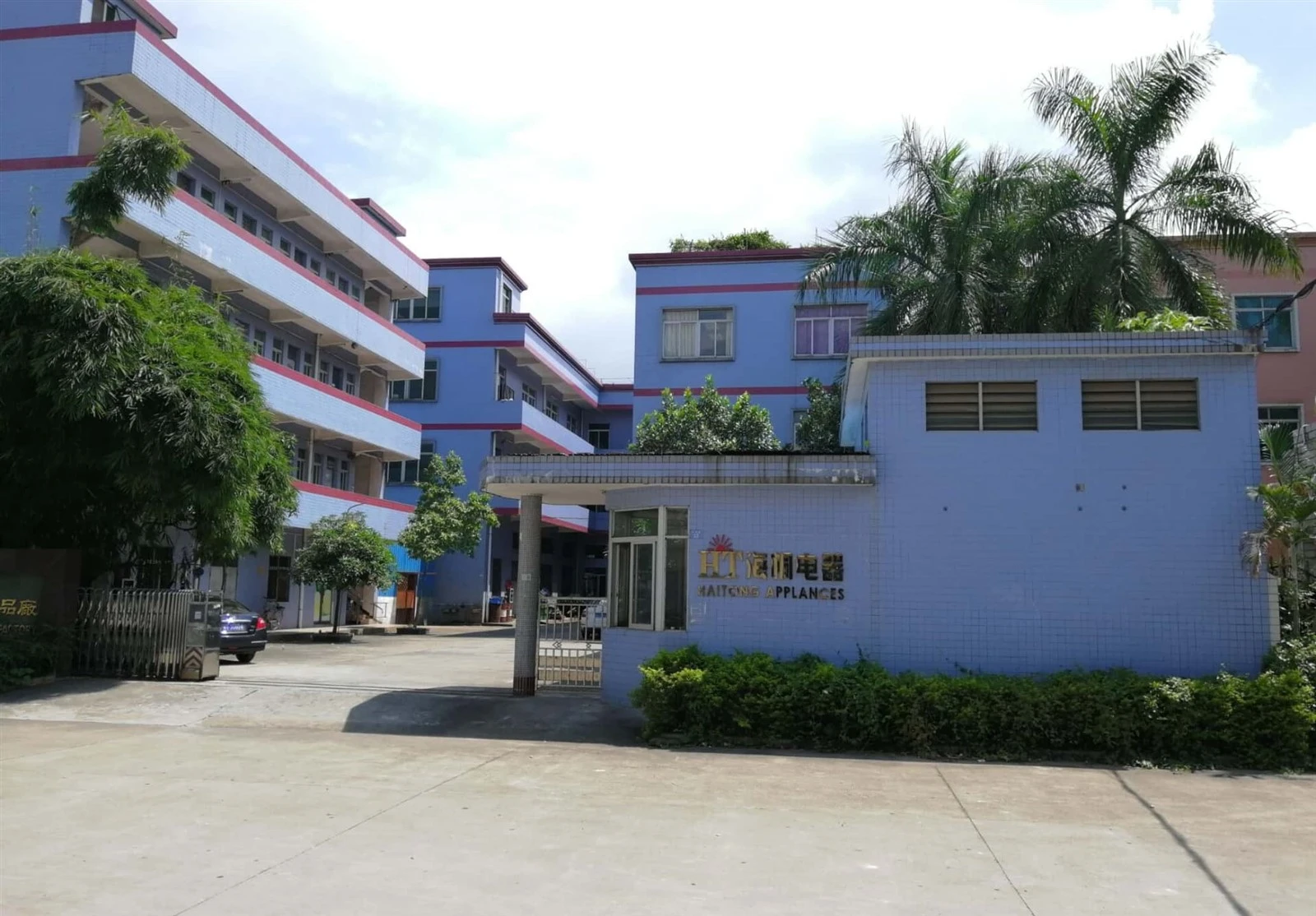

The supplied page includes factory / customer imagery and a certificate display. It also describes in-house SMT, assembly, aging and shielding-test resources and export experience with brands, importers and distributors. Exact certificates, reports or audit documents should be matched to the ordered model, final configuration and destination market rather than assumed from the wider company portfolio.
Buyer FAQ
Q1: What Is The Main Difference Between HT-858 And A Simple Two-Band Portable Radio?
HT-858 adds six shortwave ranges to FM and MW/AM, along with a swiveling telescopic antenna, hand-crank power, a rechargeable Ni-CD pack, D-cell backup, DC input, side LED light, shoulder strap and a 3.5mm private-listening socket.
Q2: Are Batteries Included?
The supplied specification lists an included 2.4V 300mAh Ni-CD AA rechargeable pack. Two D-size dry batteries are supported as an alternative operating source but are not included.
Q3: What Should I Confirm Before Approving Retail Packaging?
Confirm the exact frequency chart, power arrangement, included accessories, headphone / strap set, logo, manual, barcode and any market-specific wording against the physical sample. The box should describe the approved HT-858 version, not a generic multi-band radio.
Q4: What Is The Normal MOQ And Production Timing?
The source page lists 500 PCS as the MOQ reference and about 30 days for mass-production planning, with final timing depending on quantity, customization, material readiness and the factory schedule. Sample timing is typically about 5 days when the required materials and artwork are available.
Q5: Can I Evaluate A Portable AM FM Radio With Headphone Jack Before Mass Production?
Yes. A sample can be used to confirm band coverage, tuning, speaker and headphone output, antenna movement, crank operation, rechargeable and dry-battery power, DC input, LED light, carrying arrangement, branding and packaging before the production version is released.
Hot Tags: portable am fm radio with headphone jack, China portable am fm radio with headphone jack manufacturers, suppliers, factory


