




What the Buyer Is Really Sourcing
1. A large-format time display
The 160 x 50 mm illuminated red LED area is the defining visual feature. For a bedside, guest-room or office product, this makes display readability a central purchase criterion rather than a secondary clock function.
2. A conventional AM/FM receiver
AM coverage is specified at 540-1,600 kHz and FM at 88-108 MHz. The soft antenna and built-in speaker keep the listening experience simple and self-contained for routine indoor use.
3. A radio wake-up routine
The alarm can activate the radio automatically at the set time. Snooze, Time, Up, Down and Alarm controls support the everyday sequence of setting the clock, choosing a station and using the unit as a wake-up device.
4. Fixed mains power with clock backup
The model is centered on 220V AC wall power. The supplied specification also lists a 9V DC rechargeable backup battery pack for maintaining the clock when the radio is turned off. Rear product images show a 5V DC input and a USB phone-charger connection; these should be confirmed on the ordered version before retail claims are printed.
Technical Buying Reference
|
Item |
Confirmed reference |
Item |
Confirmed reference |
|
Radio bands |
AM / FM |
Display |
Red LED digital display |
|
AM range |
540-1,600 kHz |
FM range |
88-108 MHz |
|
Main power |
220V AC |
Clock backup |
9V DC rechargeable battery pack |
|
Speaker |
66 mm, 8Ω, 1W |
Antenna |
Soft antenna |
|
Alarm |
Automatic radio activation |
Controls |
Snooze / Time / Up / Down / Alarm |
|
LED area |
160 x 50 mm |
Frequency indicator |
Illuminated |
|
Rear connection |
5V DC input shown on product image |
USB connection |
Phone-charger connection shown on product image |
Where a Digital Display Clock Radio Fits in a Buyer Range
HT-003 is best positioned around visibility and routine rather than feature count. The large red display gives the product a clear reason to exist next to smaller clock radios, while AM/FM and automatic radio wake-up keep the operating concept familiar.
Visibility-first bedroom assortments
For customers who want the time to be readable from across a room, the large LED area can lead the product story. Radio and alarm functions then support the daily bedside routine without turning the unit into a multimedia device.
Hotel and guest-room sourcing
Hospitality buyers can evaluate the model as a simple fixed-location amenity: visible time, familiar AM/FM tuning, integrated audio and direct alarm controls. The most important project questions are display readability, control clarity, local power requirements and packaging identification.
Desk and office programs
The same format can work on office desks, reception counters or compact workspaces where a visible clock and background radio are more useful than portable battery operation.
Positioning Map for Different Channels
|
Channel |
Lead message |
Secondary value |
Procurement check |
|
Bedroom retail |
Large, easy-to-see red clock display |
AM/FM listening + radio alarm |
Confirm display brightness, alarm operation and AC specification. |
|
Hospitality |
Straightforward guest-room clock radio |
Familiar controls and integrated speaker |
Confirm plug / power, labeling, manual language and room-use instructions. |
|
Office / desk |
Visible time + local broadcast listening |
Compact fixed indoor format |
Confirm display angle, speaker output and control access. |
|
Private label |
Brandable indoor clock platform |
Box, manual, label and SKU customization |
Freeze the approved hardware before artwork is released. |
Why HT-003 Should Not Be Sold Like HT-001 or HT-004
Within a clock-radio range, HT-003 has a different reason to buy: the 160 x 50 mm display is the visual anchor. A buyer can therefore separate the assortment by use case - compact basic clock radio, dual-alarm model, and large-display model - instead of presenting several near-identical products with only model-number differences.
OEM Planning Through a Visual-Interface Control Sheet
For this model, customization is easier to manage when the buyer freezes the visible user interface first, then locks the electrical and retail details behind it. This avoids a common problem in clock-radio projects: artwork and labels being approved before the actual display, controls or rear connections are confirmed.
Control Sheet A - Front-of-product experience
• Red LED display appearance and the 160 x 50 mm visible area.
• Clock / alarm control names, button positions and user-manual wording.
• Radio tuning presentation and any illuminated frequency indication.
Control Sheet B - Power and audio configuration
• 220V AC requirement for the ordered market or any feasible market-specific power review.
• 9V DC rechargeable backup-pack arrangement for the clock function.
• 66 mm, 8Ω / 1W speaker and soft-antenna configuration.
• Rear 5V DC and USB connections only if confirmed on the production version.
Control Sheet C - Brand and retail presentation
• Logo, product label, model identification and barcode / SKU.
• Retail-box artwork, manual language, warning text and carton marks.
• Color or appearance changes only after feasibility and MOQ are reviewed.
Control Sheet D - Commercial release
• Standard MOQ reference: 500 PCS.
• Sample timing: approximately 5 days for standard or lightly customized work, subject to requested changes.
• Typical mass-production planning: around 30 days, subject to quantity, materials, customization and factory loading.
Release Gate Matrix
|
Gate |
Buyer sign-off |
Why it matters |
|
Display gate |
LED size, visibility and clock presentation |
The display is the key visual differentiator of this model. |
|
Routine gate |
Time setting, alarm and radio wake-up |
Confirms the product performs the daily use case promised on the box. |
|
Electrical gate |
AC requirement, backup arrangement and approved rear connections |
Prevents artwork or manuals from describing the wrong hardware. |
|
Retail gate |
Logo, box, manual, barcode and carton marks |
Links the functional sample to the commercial SKU. |
QC Built Around the Visibility-to-Wake Cycle
A Digital Display Clock Radio should be tested in the sequence a real user follows from evening setup to the next morning. That makes the inspection more useful than a generic checklist that only confirms whether the unit powers on.
|
Sequence |
What to verify |
Buyer risk controlled |
|
1. Power on |
Stable start-up on the approved AC configuration |
Confirms the basic electrical version matches the order. |
|
2. Read the time |
Red LED display, segment clarity and visibility |
Confirms the product's main selling point is visually acceptable. |
|
3. Set the clock |
Time / Up / Down control response |
Confirms users can configure the unit without abnormal button behavior. |
|
4. Tune AM/FM |
AM 540-1,600 kHz, FM 88-108 MHz, speaker output and antenna response |
Confirms the receiver section works on the approved sample. |
|
5. Set the alarm |
Alarm setting and automatic radio activation |
Confirms the wake-up routine operates as marketed. |
|
6. Use snooze |
Snooze response after alarm activation |
Confirms a core bedside interaction rather than only the alarm trigger. |
|
7. Check backup |
Clock behavior with the specified 9V rechargeable backup arrangement |
Confirms the clock-support function described in the specification. |
|
8. Confirm interfaces |
Approved rear 5V DC / USB connections, labels and manual wording |
Prevents a pictured interface from becoming an unsupported retail claim. |
What to Record on the Golden Sample
• Display brightness and segment appearance under normal indoor lighting.
• Exact button behavior for time, alarm and snooze functions.
• AM/FM tuning range and audible speaker output.
• Power input and backup configuration actually fitted to the sample.
• Rear ports that are present on the approved unit.
• Logo, labels, retail artwork and accessory list.
Batch Release Principle
Production inspection should reference the approved sample and order specification. If a buyer changes the display treatment, control labeling, rear connections or market power requirement, the QC sheet should be updated before mass production instead of reusing an earlier version.
Packing the Large Display as a Product Feature
For HT-003, the front display area is not only a functional component but also a visible retail feature. Packing therefore needs to protect the display window, cabinet edges, controls and rear connections while keeping the branded retail presentation clean through warehousing and international transport.
Packing points to freeze before production
• Inner protection around the display face and cabinet corners.
• Retail box orientation so pressure is not concentrated on the display area.
• Manual, barcode, product label and carton marks matched to the approved SKU.
• Confirmed power / plug information for the destination market.
• Any buyer-specific warehouse or carton identification supplied before packing begins.
Repeat-Order Control for Clock-Radio Programs
When a buyer replenishes the same item, the useful production record is not only the model number. The factory should be able to refer back to the approved display version, control labeling, radio / power setup, artwork revision, barcode and packing specification so a later order does not drift from the original commercial SKU.
|
Record to retain |
Reason for repeat orders |
|
Approved sample / photos |
Provides a physical visual reference for display and control appearance. |
|
Specification revision |
Prevents silent changes to power, ports or radio details. |
|
Artwork version |
Keeps box, manual and labels synchronized. |
|
Packing specification |
Maintains protection and carton presentation across replenishment orders. |
Supplier Evidence for Buyer Qualification
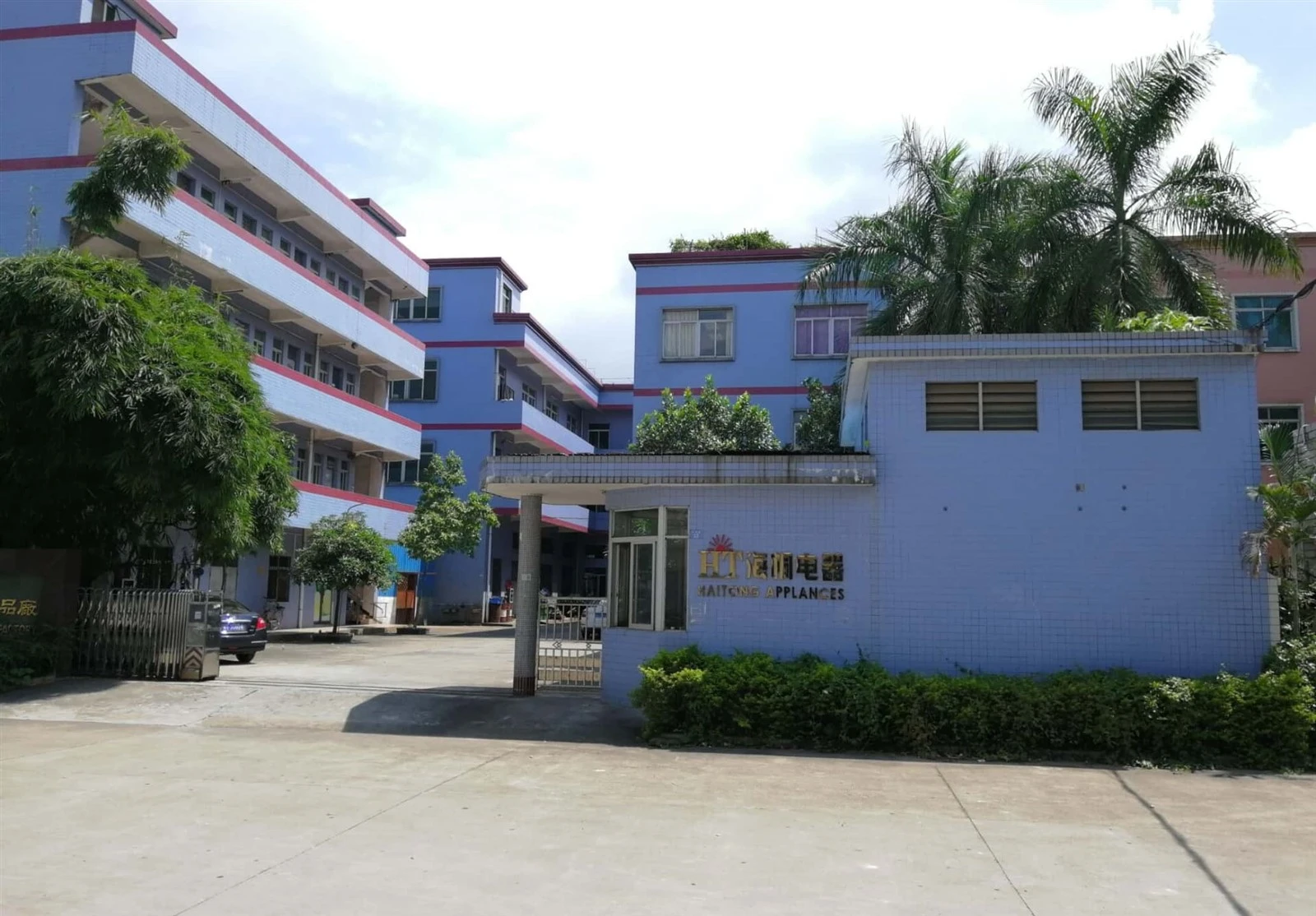

The supplied material presents Hai Tong as a Dongguan radio manufacturer with in-house SMT, assembly, aging and shielding-related testing resources, together with factory / product compliance materials. Buyers should confirm which document applies to the exact model and destination market.
Buyer FAQ
Q1: What Is The Main Commercial Difference Of HT-003?
Its 160 x 50 mm red LED display gives the product a stronger large-display position within a clock-radio range.
Q2: What Radio Coverage Is Listed?
AM 540-1,600 kHz and FM 88-108 MHz, with a soft antenna and a built-in 66 mm, 8Ω / 1W speaker.
Q3: What Is The Standard MOQ?
The source page lists 500 PCS. Custom appearance, packaging or market-specific requirements may affect the workable commercial conditions.
Q4: What Should Be Confirmed Before Artwork Is Finalized?
Confirm the display, control labeling, radio range, power and backup arrangement, rear connections actually fitted to the ordered version, logo, manual, barcode and retail box.
Q5: Can I Evaluate A Digital Display Clock Radio Before Mass Production?
Yes. A sample can be used to review display readability, AM/FM operation, alarm and radio wake-up behavior, controls, speaker output, rear connections and appearance before production and packaging are frozen.
Hot Tags: digital display clock radio, China digital display clock radio manufacturers, suppliers, factory


